


June 8, 2022
What Is SEO & Why Is It Important?

What Is Search Engine Optimization?
SEO, short for Search Engine Optimization, is a set of tactics implemented to escalate your website’s organic traffic and rankings to the top of search results for your business’ targeted services on search engines like Google, Bing, Yahoo, Ask.com, and Duck, Duck, Go.
The majority of people begin their online journey with a search engine. Google’s search engine is users’ top choice, receiving 89% of mobile search traffic. The second closest search engine gets a mere 7.8% of mobile traffic. First page search results, rendered from individual searches, get the most attention with over 25% of clicks going to the first organic result in Google Search.
With the right SEO approach, it's possible to increase the visibility of your website, generate leads, drive conversions, and improve brand awareness for your target audience. With these goals in mind, let's take a closer look at SEO.

It’s important to understand the different types of SEO in order to customize your marketing plan so it will achieve your desired results.
The three types of SEO are:
- On-page SEO uses specific tactics to improve the content on a website in order to make it more appealing to search engine crawlers. These tactics can include adjusting metadata, providing valuable information in content, implementing keywords, adding internal links, and more.
- Off-page SEO utilizes strategies which are implemented outside a website or "off" a site to improve its rankings. Citations, backlinking, guest blogging, social media marketing, and brand building all play a part in off-page SEO.
- Technical SEO improves the technical aspects of a website so it’s easier for search engines to crawl and index. These changes are the least visible changes made to a site for SEO purposes. Some examples of technical SEO include optimizing your site for mobile devices, decreasing page loading time, fixing duplicate content issues, creating XML sitemaps, and many more.
It's important to remember that while the key goal of SEO is to achieve higher rankings, you should keep your target audiences' needs in mind. By making a website practical, informative, and user-friendly, the site should gain favor with Google and rise on search engine results pages, known as SERPs.
How Does SEO Work?
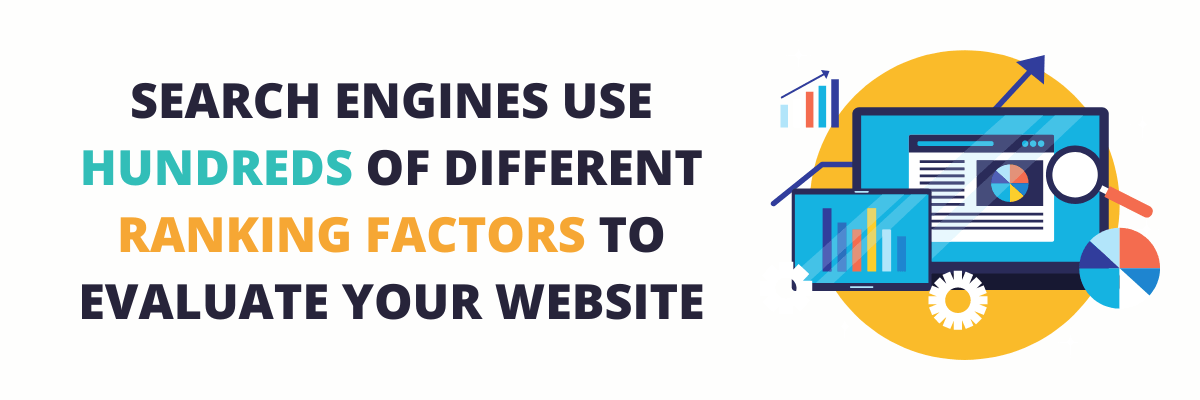
Search engines use hundreds of different ranking factors to evaluate websites and generate search results. Every time crawlers visit a website they check it against numerous criteria. They will then index the information in order to serve it up later when it’s most relevant to a searcher’s inquiry. The majority of web pages will be crawled, however, irrelevant, unsolicited, or duplicate content rarely gets indexed.
Search engines have ever advancing AI-powered algorithms that are regularly updated to suit users' needs. It's up to business owners and managers to make sure their site stays up to date with algorithm changes and adjust their SEO efforts.
No matter how well website content answers a searcher's query, poor design or excessive loading speed could keep it off the top search result page. A well-designed SEO strategy makes sure all aspects of a website are in sync, while implementing a variety of tactics that make a site more appealing to searchers and search engines.
Why Is SEO Important?
Search Engine Optimization is a foundational piece to a successful digital marketing strategy. With most buyers' journeys taking place online, in whole or in part, it's imperative to draw your target audience to your website. Doing this without improving your website rankings is nearly impossible.
The benefits of a high-quality SEO strategy include:
- More organic leads: The higher your website climbs, the more users you can reach. The more users you reach, the more potential clients are exposed to your business. More exposure gives you more chances to convert potential prospects into customers.
- Better brand awareness: Websites that appear on the top spots of SERPs are considered more trustworthy and credible. When your business appears at the top of searches, clients and prospective clients gain assurance in choosing you for future business or referring others to you, bringing more people to your virtual doorstep.
- Improved PPC campaign: Superior SEO practices seamlessly complement your Pay Per Click (PPC) advertising, and paid search tactics help move your target audience through the sales funnel. SEO can also help lower your PPC program's CPA (cost per acquisition).
- Competitive advantage: Since your competition is likely to be using an SEO strategy, improving yours can help you maintain, and may even grow your market share, increasing revenue.
- Cost-effectiveness: SEO can be a highly cost-effective practice. With numerous free online tools, it's possible to handle some aspects of a campaign on your own. Also, unlike a PPC campaign that will lose its benefit once your budget ends, SEO offers ongoing, long-term benefits.
While SEO is only one tool used in digital marketing campaigns, it's irreplaceable. When implemented in tandem with paid search marketing, social media marketing, email marketing, and other tactics, it can directly affect your company's bottom line, moving it in a positive direction.
Important to know: SEO is a marathon, not a sprint. Don't expect immediate results after beginning an SEO campaign, it could take several months for your strategy to kick in fully, however once it does, you can start reaping ongoing benefits.
The Takeaway
Search Engine Optimization is an integral part of a successful digital marketing strategy. By implementing proper SEO tactics, you can push your website to the top of SERPs, where it can reach a broad target audience.
The best time to start your SEO campaign is now. Summit offers the right tools to help develop and manage effective SEO tactics.
“Move toward your customers and the first page of Google search” with the help of our SEO team!

Never Miss an Update! Join the Summit Mailing List:
Mailing List
Additional Helpful Blogs